Field: a commonplace book
An invitation to a slow scroll of poems, haiku, koans and photographs — the long-tail sensibility that sits behind the Conscious Cities Index.
Most of what we publish on this journal is about cities — the design of a pavement, the politics of a plan, the slow arithmetic of stewardship. This entry points the other way. It is an invitation to a small, unhurried corner of the wider Conscious Cities Index (an XDG Labs initiative) called Field: a commonplace book.
Field lives at inclusivecitymaking.com/field-notes. It is, in its own words, a slow scroll of poems, haiku, koans, witticisms, and photographs from the road. There is no order. There is no hurry. Read one. Or read them all.
Why a commonplace book belongs next to an index.
The Index is an instrument. It measures cities for nature, culture and well-being — the conditions under which a place is good to live in, not just efficient to operate. Instruments need calibration. They also need a sensibility behind them: a sense of what they are tuned for, and why it matters.
That sensibility is hard to put into a methodology note. It is easier to put into a Bashō haiku about a frog, or a W. H. Davies poem about having no time to stand and stare, or a black-and-white photograph of a willow leaning over an empty bench. Field is the long tail of that sensibility — the reading list, the field record, the things held close that taught the instrument what to measure for.
What is in it.
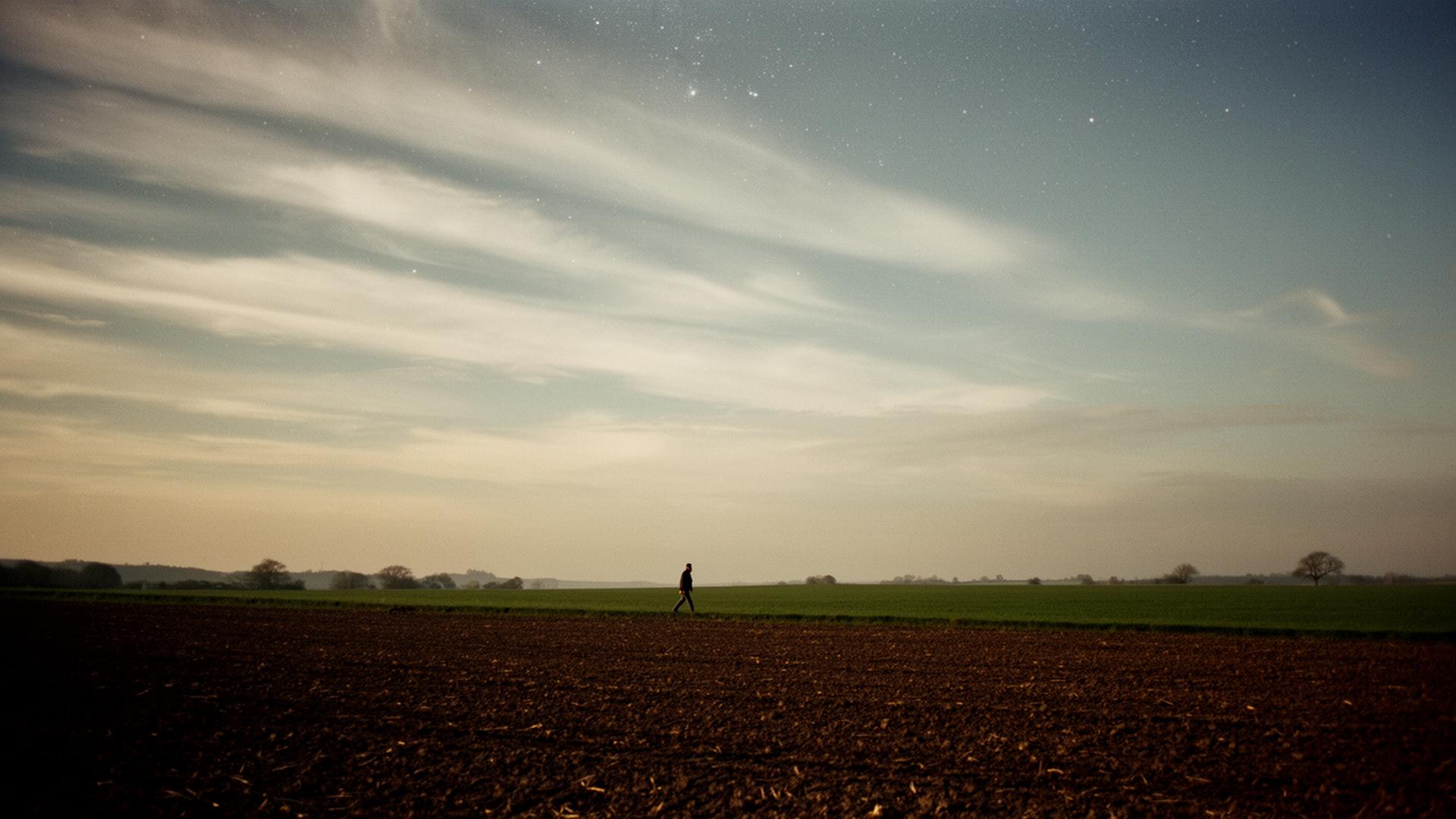
Poems by Wordsworth, Wendell Berry, Kabir. Haiku from Bashō, Buson, Kijo. Zen koans and Rumi fragments. Quiet photographs — punts at rest on the Cherwell; a cascade at Blenheim; a green lane, anywhere; a small figure in a very large ploughed field; a sapling staked in a meadow; a copper beech holding a street.
And then, halfway down, the scale lifts. The instrument measures cities, but the city sits on a planet, and the planet sits in a dark. A long sequence of night-sky photographs follows — the galactic core rising, a river of stars, town-light against star-light — and the entry closes, as these things often do, with Carl Sagan's Pale Blue Dot:
“Look again at that dot. That's here. That's home. That's us.”
— Carl Sagan, Pale Blue Dot, 1994
How to read it.
Slowly. Out of order. On a Sunday. On a Tuesday at 6pm when the day has not quite landed. Field is not a manifesto and it is not the Index. It is the thing that sits underneath both — a reminder that the cities we are trying to measure are, in the end, the places where people stand beneath the boughs and stare as long as sheep or cows.
We will return to harder questions — districts, governance, capacity — in the next entry. For now, the recommendation is simple: open Field in another tab, scroll for a minute, and come back when you are ready.