A placemaker's guide to Singapore: seven districts to walk before The Art of Citymaking
Marina Bay, Jurong Lake District, Kampong Gelam, Tiong Bahru, Punggol Digital District and the Bras Basah arts belt — a working guide to the Singapore districts where placemaking is most legible, and the questions worth asking when you walk them.
Singapore is one of the few cities in the world where placemaking is treated as an instrument of national policy, not a discretionary budget line. For the citymakers arriving in June 2026 — for the World Cities Summit, for #WCSWeek, for The Art of Citymaking — the city itself is the syllabus. This is a working guide to the districts where the practice is most legible, and to the questions worth asking when you walk them.
1. Why Singapore rewards a placemaker’s eye.
Singapore is small enough to read in a week and ambitious enough to argue with for years. Land is scarce, the state is patient, and the agencies that shape the public realm — URA, NParks, HDB, LTA — are unusually willing to test, measure, and revise. The result is a city that behaves like a living laboratory: every district is a deliberate hypothesis about how people might live, work, and gather together.
For the visiting citymaker, that legibility is the gift. You can see, in walking distance, what an adaptive neighbourhood looks like when it is funded for decades; what cultural anchoring does to a precinct; what happens when a waterfront is programmed as public infrastructure rather than as real estate.
2. Marina Bay — the staged civic room.
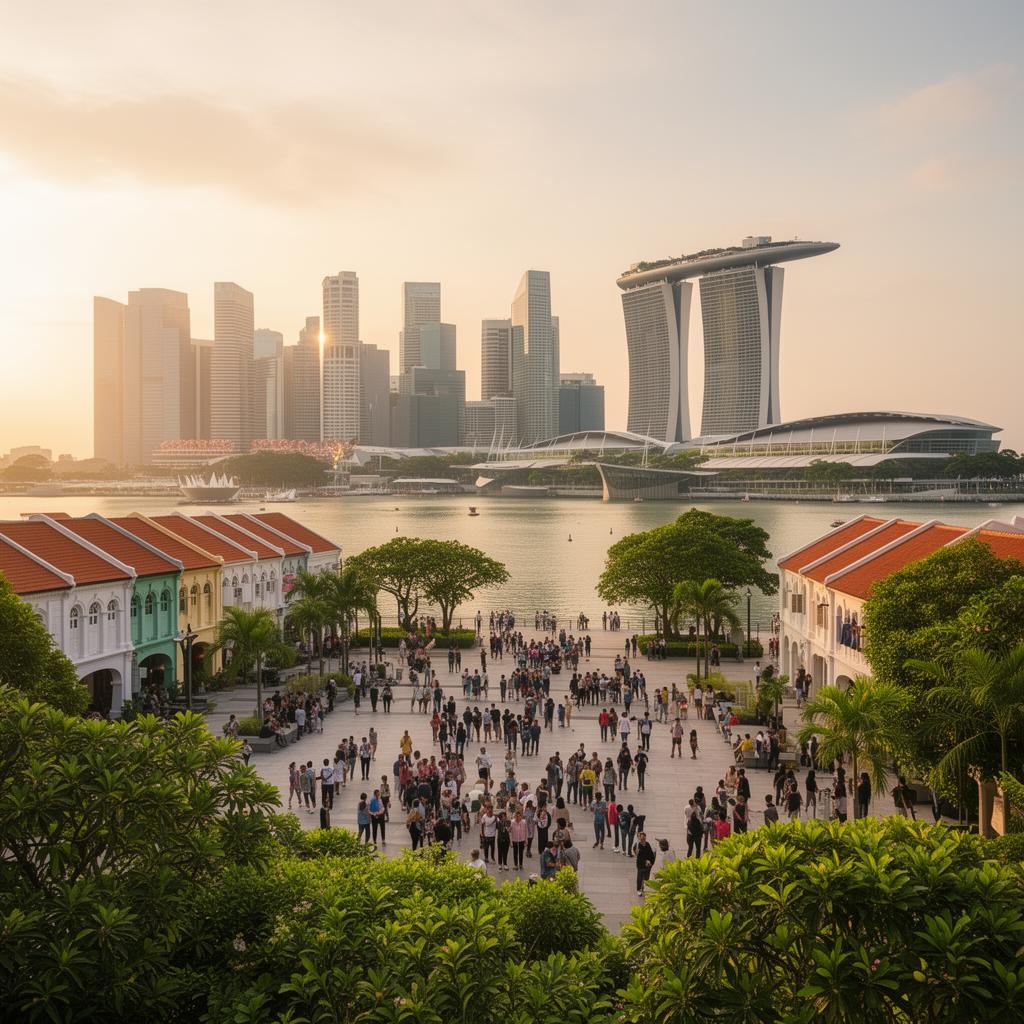
Marina Bay is the district most visitors recognise and the one most easily misread. The Sands, the Gardens, the ArtScience Museum and the floating platform are the photogenic layer. The placemaking layer sits underneath: a continuous, walkable promenade that treats the water as the centre of the room, a calendar of free public programming that runs year-round, and an unusually disciplined refusal to let private frontage close the edge.
Walk the loop from the Esplanade to Gardens by the Bay at dusk and the question to hold is this: who is the bay for on a Tuesday? The honest test of a civic waterfront is not the New Year fireworks; it is the ordinary evening when nothing special is on, and the space still fills with people who live here.
3. Jurong Lake District — the long-horizon experiment.
Jurong Lake District is the city’s most explicit bet on a twenty-year horizon. It is being assembled as a second CBD, organised around a freshwater lake rather than a road, with the Science Centre and a new tourism precinct anchoring the cultural layer and the Cross Island and Jurong Region MRT lines knitting it into the rest of the island.
For the placemaker, Jurong Lake is the district where the sequencing matters most. The cultural and ecological infrastructure — the lake gardens, the promenade, the science and learning anchors — is going in before the bulk of the commercial build, not after. That ordering is rare. It is the closest a major city has come to writing “programme first” into a masterplan.
4. Kampong Gelam — the heritage district that kept its operators.
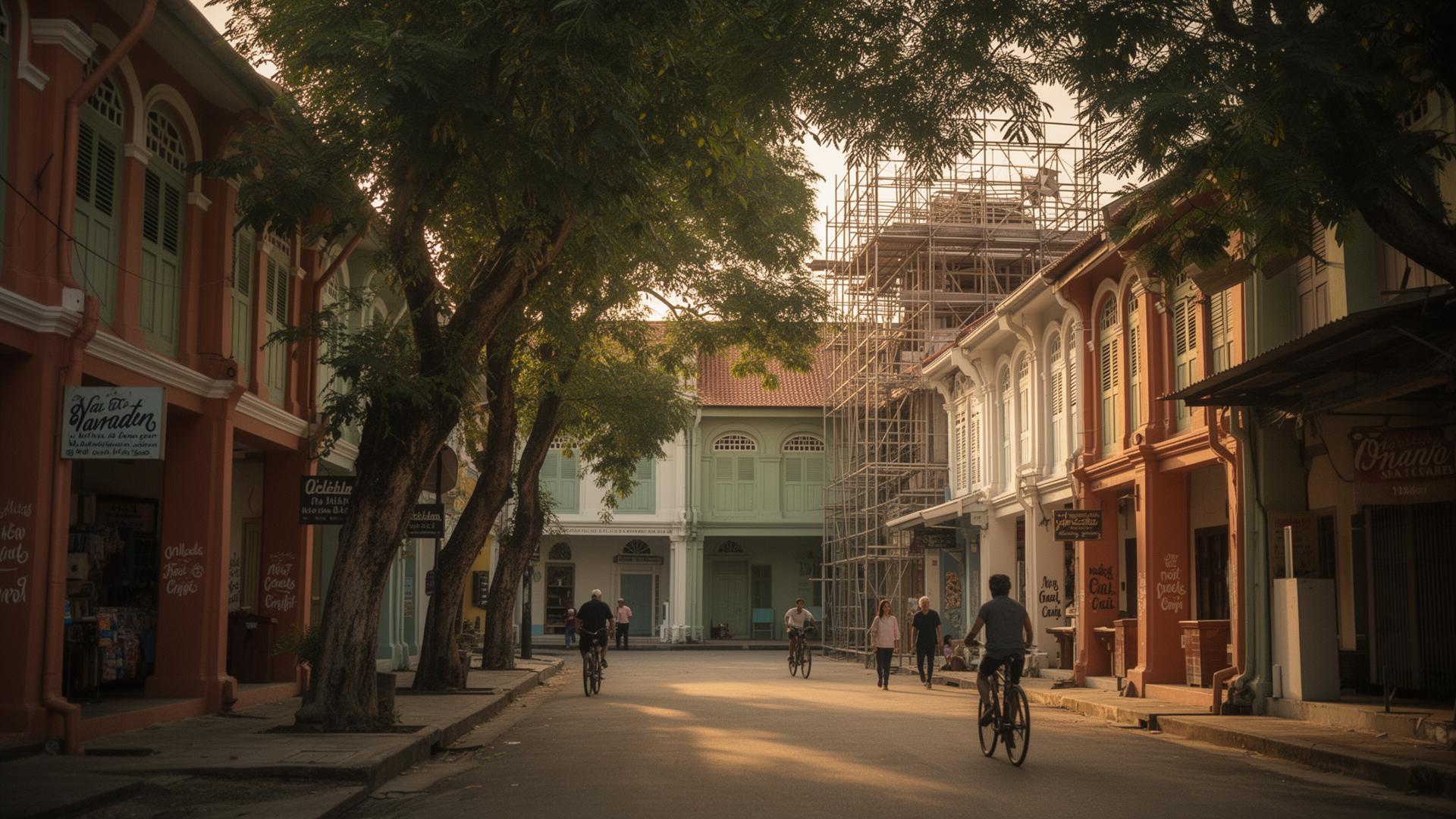
Kampong Gelam is the precinct that disproves the easy assumption that heritage districts must hollow out as they become popular. The Malay Heritage Centre anchors the cultural identity; Haji Lane and Bali Lane have become commercial without (yet) displacing the independent operators who made them interesting; the street programme — Aliwal Arts Centre, Hari Raya Bazaar, Malay Culture Fest — runs from inside the community rather than bolted on from outside.
The question Kampong Gelam puts to other Asian heritage districts is one of stewardship: who owns the curation of the precinct, and on what time horizon? Singapore’s answer — a placemaking partnership between URA, the heritage centre, and the merchant associations — is one of the more replicable models in the region.
5. Tiong Bahru — the quiet adaptive neighbourhood.
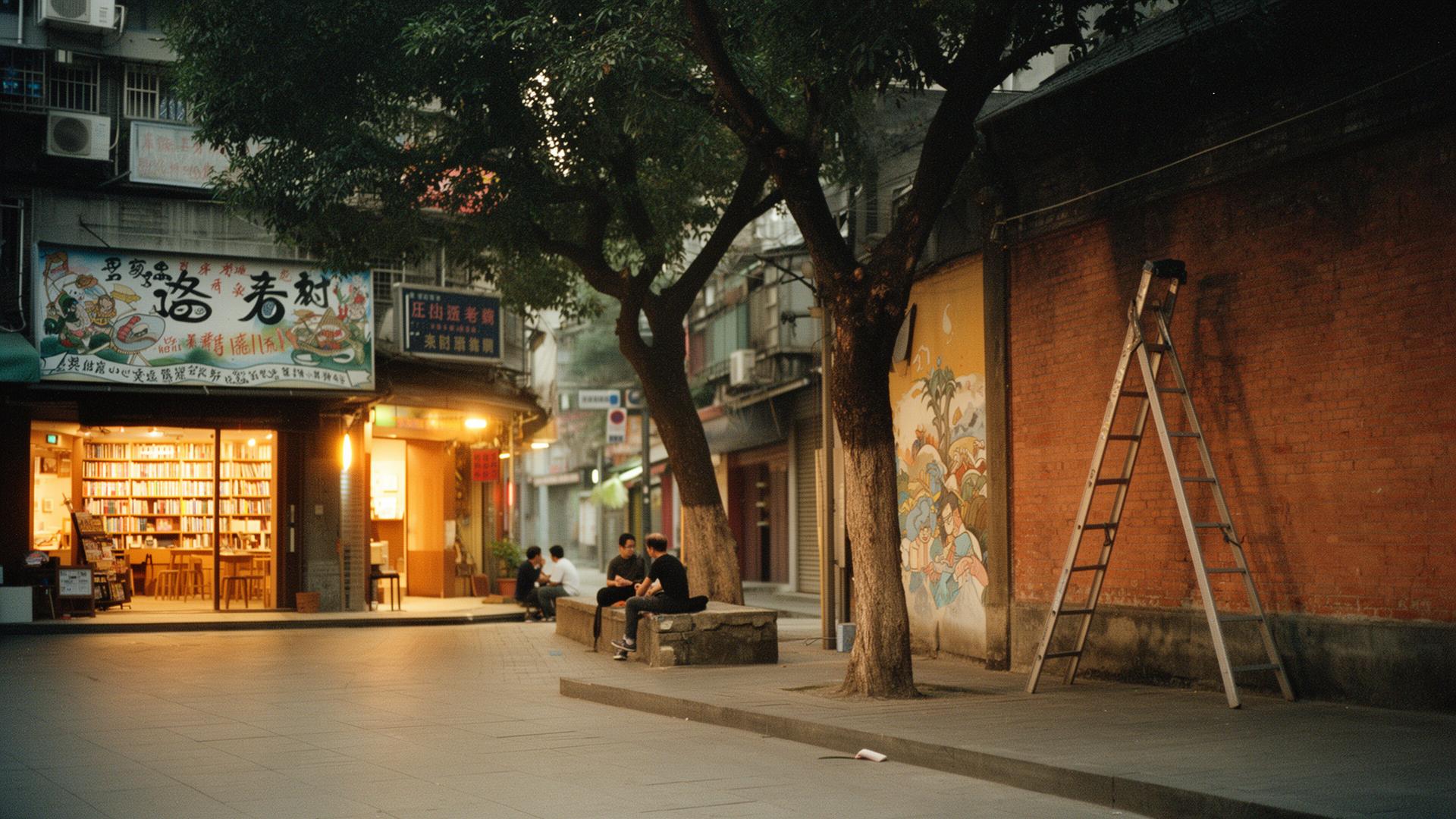
Tiong Bahru is the district that rewards slow walking. The 1930s SIT walk-up blocks are intact; the ground floors have been edited gently over twenty years to absorb an independent bookshop, a bakery that has outlasted the trend it started, a market hall that still trades from before dawn, and a clutch of small studios and design practices.
It is the closest Singapore comes to demonstrating an adaptive neighbourhood in the strict sense: a place designed and stewarded so that the ground floor can change tenant without the neighbourhood changing character. The instruments that hold it — conservation guidelines, HDB-owned commercial units let at sub-market rates to anchor operators, a residents’ association with a real voice — are the ones to look for in any precinct that claims the label.
6. Punggol Digital District — urban software, made visible.
Punggol Digital District is the cleanest illustration in Singapore of what the field is starting to call urban software: the layer of rules, data and operational practice that determines what a place is actually like to live in. The district is being delivered as an integrated stack — SIT’s new campus, a business park, public housing, a Coastal Park, and an Open Digital Platform that ties facilities, energy and mobility into one operating system.
The placemaking question Punggol forces is the harder one:who edits the software? A neighbourhood whose operational logic is set in a vendor contract is not the same as a neighbourhood whose residents and operators can change how it behaves. The districts that age best are the ones where the software stays editable.
7. Bras Basah·Bugis — the arts and learning belt.
Bras Basah·Bugis is the precinct that demonstrates what sustained cultural anchoring does to a few square kilometres over thirty years. The National Museum, the National Library, the Singapore Art Museum, LASALLE, NAFA, the School of the Arts, the Cathedral of the Good Shepherd, the Stamford arts belt — the density of institutions is the placemaking instrument. Programming runs nearly every night of the week.
Walk the belt from the National Library down to the Civic District and the lesson is simple: cultural infrastructure is infrastructure. It produces footfall, retains small operators, anchors public transport patronage, and gives the city its evening life. Singapore’s decision to fund it on the same timescales as roads is the policy choice most worth copying.
8. A short checklist for the visiting citymaker.
Five questions to carry into any of these districts, and home from them:
- Who is here on a Tuesday? Programming for residents, not just visitors, is the most honest indicator of a working precinct.
- Who holds the ground-floor leases? If the independent operators have secure, sub-market tenure, the neighbourhood can absorb change. If they don’t, it can’t.
- What is the time horizon of the stewardship body?A twenty-year mandate produces different decisions from a three-year project office.
- Did the cultural infrastructure come first, or last?The sequencing is the policy.
- Who edits the urban software? Residents, operators, the agency, the vendor — the answer changes the neighbourhood.
9. Where this guide leads.
The Art of Citymaking gathers at the Glass Dome — Landmark of Good on 17 June 2026, as an Official Associated Event of World Cities Summit 2026 and part of #WCSWeek. The day’s programme is organised around three themes — Adaptive Neighbourhoods, Urban Software, and Placemaking & Legacy — that map directly onto the districts above. The room is the practitioners who do this work in cities across Asia-Pacific and beyond: stewards, operators, anchors, foundation leads, and city legacy teams comparing notes on what is actually holding.
If you are in Singapore for #WCSWeek, walk these districts first. Then come and argue about them with the people who build, fund, and steward their equivalents at home.