Carla & Viola Bartoli: what a small town can teach a big one
A notary, a lawyer and a set of derelict Sicilian courtyards. The second generation of Farm Cultural Park on art as a political act — and why residency, not spectacle, is the method that travels.
Favara is a town in the province of Agrigento, in western Sicily, of the kind that most planning literature files under decline: emptying historic centre, buildings left to fall in on themselves, young people leaving. In 2010 a notary and a lawyer, Andrea Bartoli and Florinda Saieva, began buying the derelict courtyards behind the main street and handing them to artists. That cluster of restored courtyards became Farm Cultural Park — an independent cultural centre that has since been studied, copied and argued about across Europe.
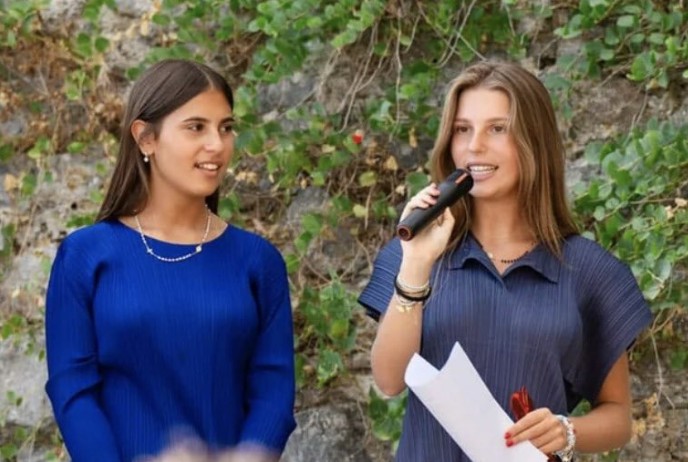
Carla and Viola Bartoli are their daughters, and they grew up inside it. That is an unusual credential and it is the point: they did not arrive at cultural regeneration through a masters programme or a consultancy. They watched a town change around them, over a decade, at the pace such things actually take.
Art as a political act.
The Farm argument is not that art makes a place prettier. It is that occupying abandoned property with culture is a political move — it changes who feels entitled to be in a public space, and what a small town believes it is allowed to want. Twenty years ago Charles Landry gave the world the phrase “the Creative City”. In Favara, two people with no cultural-sector background took it literally, and the result is one of the more quietly radical experiments in urban regeneration anywhere.
Out of it came Countless Cities, the biennial of the cities of the world hosted at Farm, and a Museum of the Cities of the World. Carla and Viola have helped shape the biennial, bringing young voices into conversations usually held between mayors and consultants: how small towns and overlooked places become laboratories for contemporary culture, civic imagination and community-led change. Alongside the cultural work, Carla has led humanitarian initiatives in response to the war in Ukraine.
The wider context has caught up with them. Western Sicily is now written about as an emerging arts hub in its own right — Favara is no longer the anomaly it was in 2010, which is arguably the strongest evidence that the method transfers.
From Favara, with love.
Both sisters joined the festival as Young Creators in Residence, and their session at the Glass Dome on 17 June 2026 — Can Art Reinvent a City? — brought the story to Asia for the first time. It opened with a presentation, From Favara, with love: Farm Cultural Park, art as a political act, and how a small Sicilian town became a global reference for what culture can do to a place. It closed with the world debut of Countless Cities Asia, announced from the festival stage before anywhere else.
The second half, in conversation with Chevon Low of Airbnb, was titled Residency as method — what artists, curators and citymakers can leave behind in an Asia-Pacific city when they stay long enough to listen. That framing is the useful export. Not the courtyards, not the biennial, but the discipline of duration: the belief that a place gives up its real material only to people who are still there after the launch photographs.
For a region full of fast projects and short residencies, two teenagers from a Sicilian town of forty thousand made the least fashionable argument in the programme, and the hardest one to refute.