Before Clothes, There is Cloth
Choosing fabric at People’s Park opened my eyes to the materials, skills and city spaces behind what we wear.
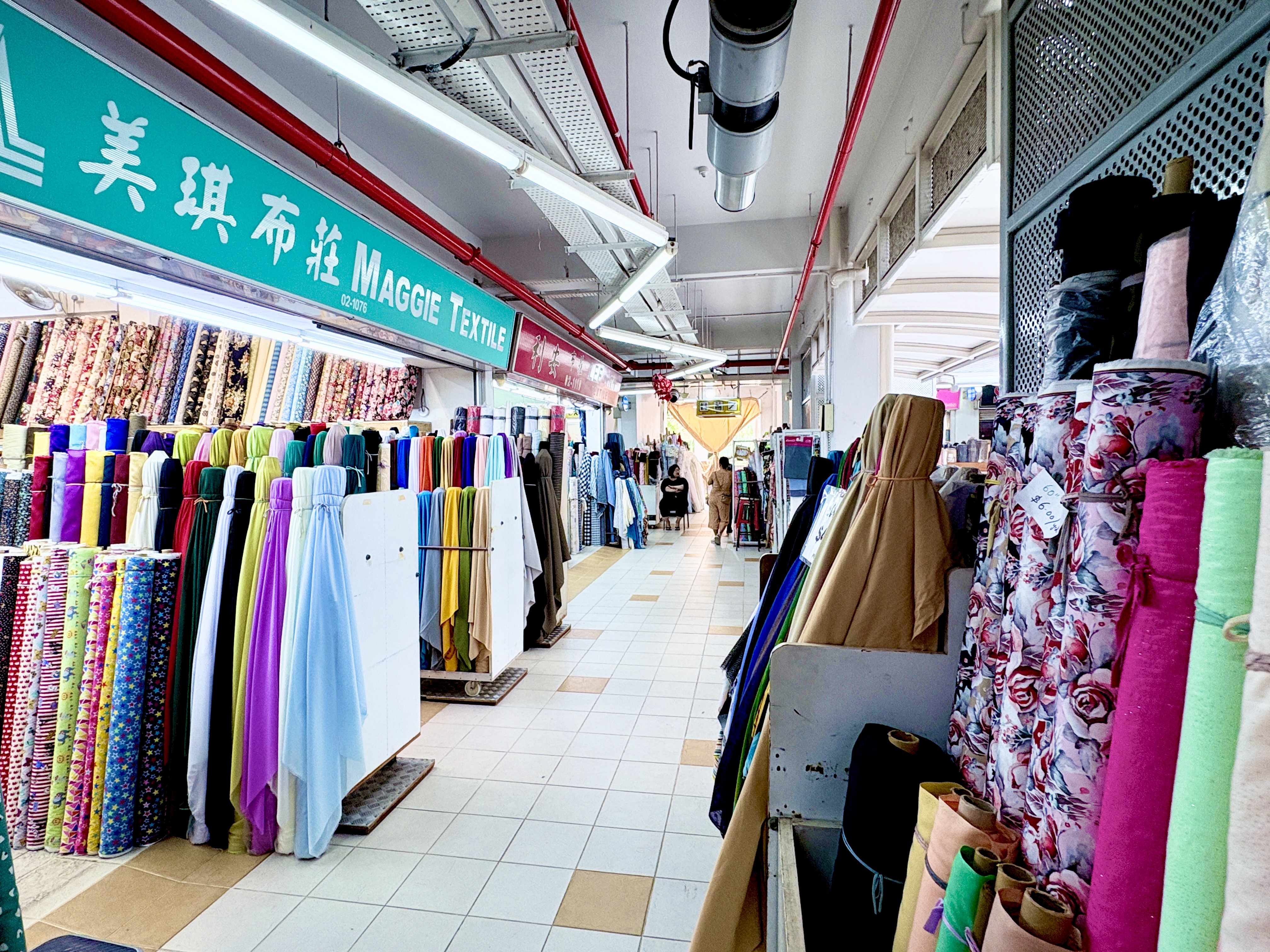
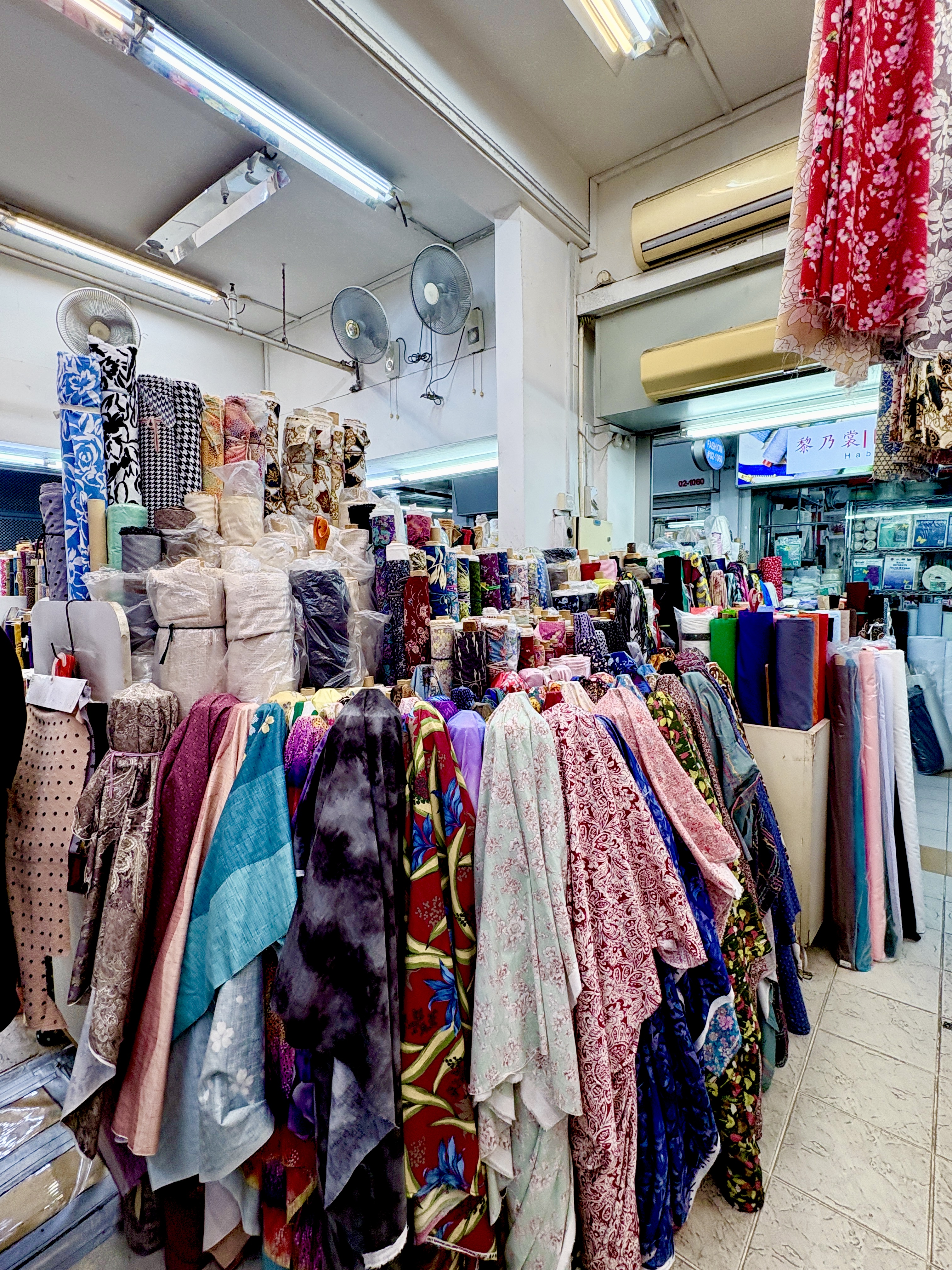
Above People’s Park Food Centre, rolls of cloth line the corridor outside Maggie Textile. · Credit: Image by Leadership for Cities
Above People’s Park Food Centre in Singapore, corridors of fabric shops offer clothes in the making: rolls of colour, pattern and texture, waiting to become something someone will wear. I had come to choose cloth for dressmaking, with little experience of how to begin.
My more familiar experience was buying finished clothes at malls: looking at what was available, deciding what I liked, checking the fit and price.
At People’s Park, I found myself thinking about an earlier stage in the life of a garment. Before there was something to try on, there was material to understand, work to be done, and a series of decisions I had rarely considered.
Along the corridors, rolls of cloth stood closely together. Floral prints, checks and solid colours filled the shopfronts. Some fabrics were draped loosely over their stands, others wound tightly around cardboard cores. There was plenty to look at, and much that I did not yet know how to judge.
The merchants were extremely helpful and knowledgeable, offering advice that made an unfamiliar process approachable. Choosing cloth became an introduction to the relationship between material and craftsmanship — and to the people whose knowledge helps turn one into the other.
The experience made me appreciate the role these shops play in city life. What does a place like this enable us to learn? And what would become harder to do if such places were no longer within reach?
A market with a history
The textile shops above People’s Park Food Centre belong to a longer history of trade and urban change in Chinatown.
The National Heritage Board’s account traces the emergence of a textiles bazaar in the old market after the Second World War. By mid-1969, traders were moving into a new development, with food stalls on the first level and retail and textile shops on the second and third. The combination of eating, shopping and everyday enterprise has deep roots here.
Walking through the fabric shops today, that history has a practical presence. Cloth occupies shelves, stands and shopfronts along shared corridors. Businesses sit close enough for a customer to move between them, exploring materials and possibilities.
For a first-time visitor like me, the value of having these shops close together was immediate. Here was a place where choosing cloth was an ordinary activity, supported by people who understood it. I could arrive knowing very little and begin learning by browsing, asking questions and listening to the merchants’ advice.
That openness to the beginner seems an important quality for a city to possess.
The knowledge behind the purchase
The rest of this piece is for Friends and Fellows.
Friends and Fellows read the whole Commons — essays, films and session recordings. Sign in with the email on your membership, or join from SGD 18.80 a year.