The Right to Stand, or Walk
A trial at two Singapore MRT stations asks commuters to rethink what it means to make way.
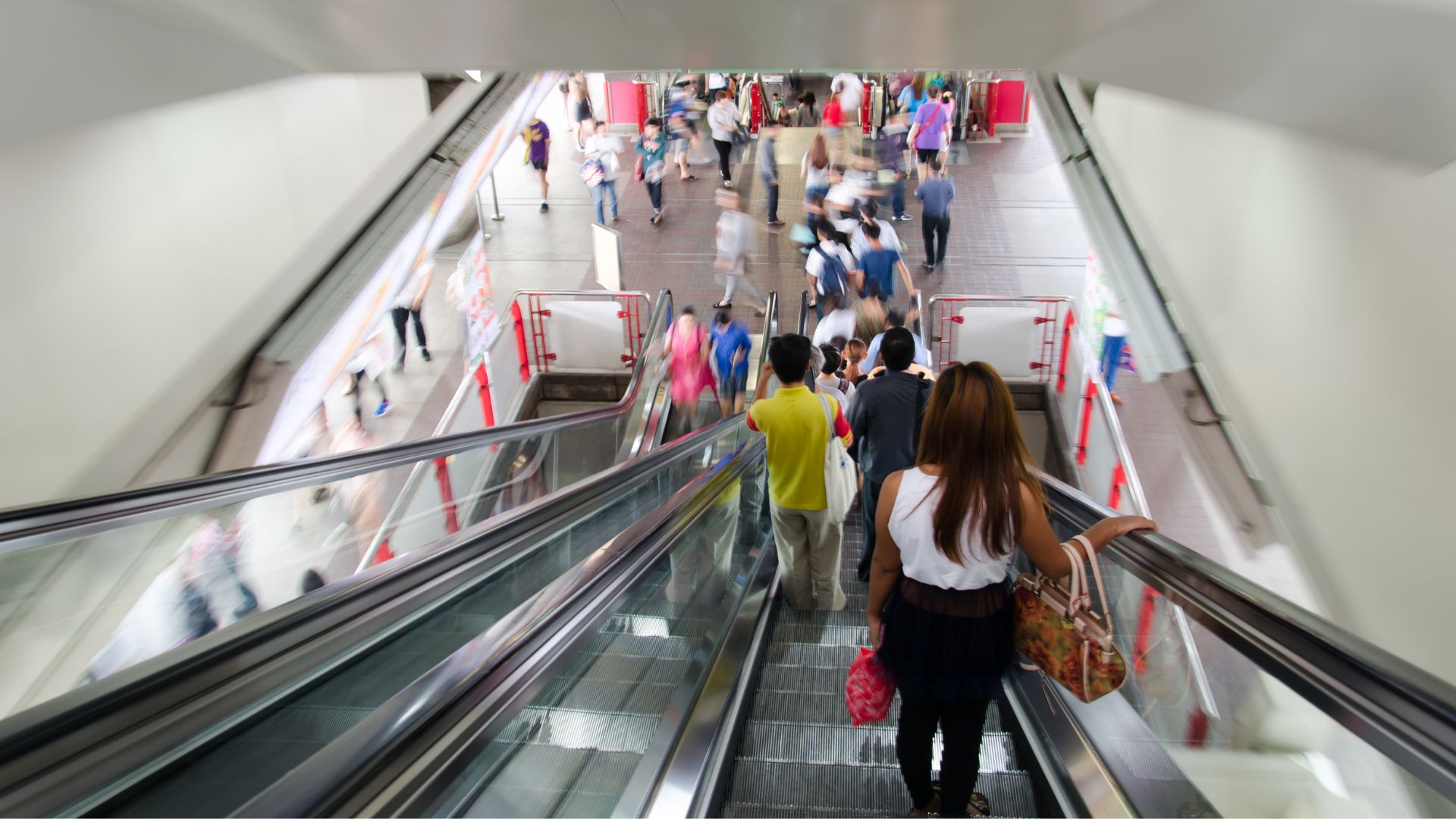
Illustrative photo. · Credit: “Blur Escalator” by khunkorn via Canva.
At City Hall MRT, you can find yourself queuing for an escalator with room to spare. The queue is for a step on the left. The right side is free for anyone in a hurry, and even when nobody is coming, people tend to leave it clear.
Since 29 October, SMRT has been running a month-long trial at City Hall and Raffles Place to see whether standing on both sides could make escalators safer and carry more people. All ten commuters CNA interviewed on 7 November preferred the familiar arrangement. One said she walks up the escalator on her morning commute to get to work by eight. For her, the right side is a useful part of a journey she knows down to the minute.
There is a courtesy in keeping left. You leave room for someone whose reasons for hurrying you may never know. It takes only a glance at the people ahead to learn what to do. The same courtesy can feel different if the right-hand rail is the one you can grip comfortably. You may find yourself choosing between a steadier ride and the expectation that you’ll move when someone comes up behind you.
CNA timed the ride at City Hall. Walking took about 20 seconds and standing took about 30. At busier moments, some people waited more than ten seconds just to board on the left, while the right side stayed relatively clear. On a separate morning visit, 8world saw short queues at Raffles Place that cleared quickly. A person in a hurry can feel the benefit of a clear lane on any given ride. The benefit of filling both sides depends on how many people are waiting at the foot of the escalator.
London’s Holborn station offers one precedent. A pilot there found that standing on both sides increased escalator capacity by about 30 per cent. Its safety findings were inconclusive. For Singapore, it would be worth seeing how long people wait to board at different times of day, how many people the escalator carries, and whether standing on both sides makes for a safer ride.
At Hakata Station in Fukuoka, Japan, a 2024 trial used sensors to prompt riders at the moment the old habit kicked in. If people queued on one side while the other stood clear, an announcement invited them to use both. The project supplier compared a week before the announcements with a week after. On the up escalator, the share of riders who walked or ran fell by 42 per cent, while the share of time a queue was present rose by about 6 per cent. How people ride and how long they wait to board are worth tracking separately.
The next time a queue forms at the escalators of City Hall or Raffles Place MRT, we might watch what happens when someone steps out of it and stands on the right. The sign says either side is fine. Seeing someone stand there might be enough for the next person to follow.
The rest of this piece is for Friends and Fellows.
Friends and Fellows read the whole Commons — essays, films and session recordings. Sign in with the email on your membership, or join from SGD 18.80 a year.