What Are We Too Quick to Throw Away?
What a café’s approach to surplus food reveals about value, everyday work and the resources we overlook.
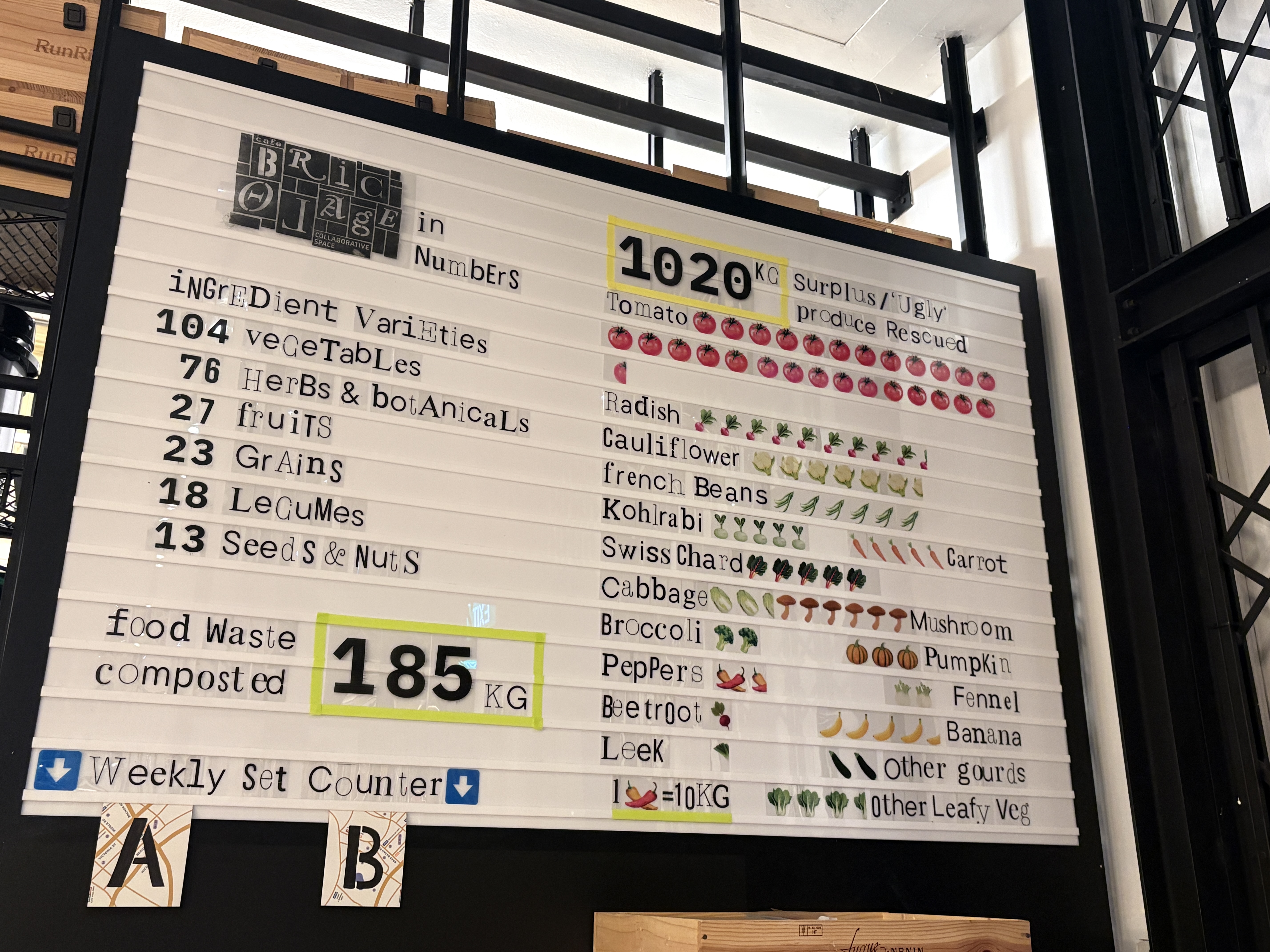
At Bricolage, a board records quantities of "ugly" foods rescued. · Credit: Image by Leadership for Cities
At Bricolage, a café and collaborative space at The Arts House, a board records quantities that rarely appear beside a menu. During our visit to Shared Table 02 in September, it displayed 1,020 kilograms of surplus or “ugly” produce rescued, and 185 kilograms of food waste composted.
Rows of small illustrations broke the rescued produce down into tomatoes, radishes, cauliflower, beans and other ingredients. Alongside them were counts of the different varieties the kitchen had worked with.
The board showed how much food could be put to use instead of being thrown away. It also prompted a question that stayed with me: How readily do we toss food away because it looks imperfect, or takes more effort to prepare?
Cooking with what is available
Bricolage describes its food as plant-forward, made from scratch and guided by full utilisation. Its lunch sets follow a pay-as-you-wish model, with a new menu every week. Published September menus included preserved string beans, pickled red onions and lacto-fermented Swiss chard.
At Shared Table 02, the Bricolage team spoke about wanting to approach food and beverage in their own way. Their account included sourcing surplus produce or ingredients from sustainable farms, using fermentation and pickling, and finding delicious uses for parts that are often discarded.
This kind of cooking asks for a different relationship with ingredients. A fixed menu begins with an intended dish and seeks what is needed to make it. Cooking responsively also begins with what is available, then considers what it might become.
There is creativity in that adjustment, but also practical judgment. What can be used now? What can be preserved? Which parts deserve closer attention?
Full utilisation asks a kitchen to keep looking before reaching for the bin. It invites diners to recognise that an ingredient can have more possibilities than the familiar preparation we associate with it.
The relationships behind a plate
The rest of this piece is for Friends and Fellows.
Friends and Fellows read the whole Commons — essays, films and session recordings. Sign in with the email on your membership, or join from SGD 18.80 a year.