“A City Is a Drama in Time”
Charles Landry, our Festival President, has spent nearly fifty years arguing that culture is a city’s operating system rather than its ornament — and that the software of a place outlives its hardware.
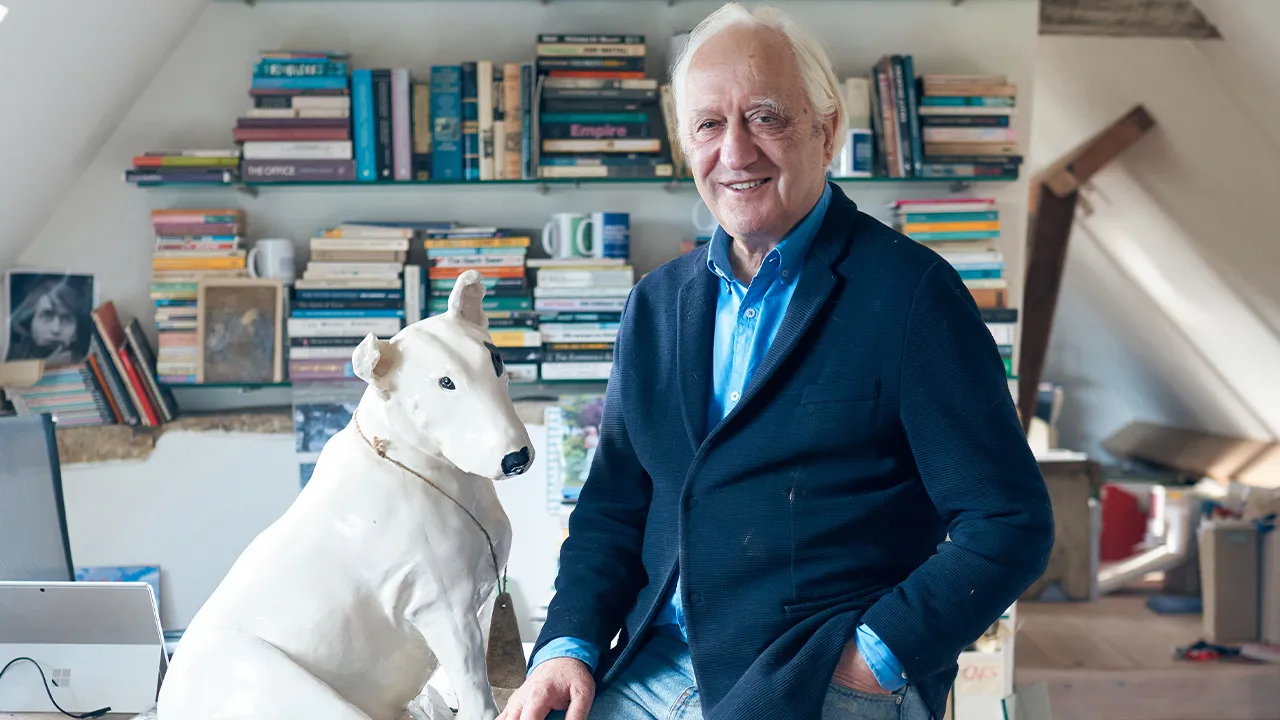
Charles Landry established Comedia in 1978 — a think tank, publisher and consultancy — and has spent the decades since working in cities all over the world on a single, stubborn proposition: that a city’s capacity to imagine is as material a resource as its land, its transport or its tax base. The Creative City: A Toolkit for Urban Innovators gave that proposition a name, and The Art of City Making gave it a method. Between them they changed the vocabulary of urban planning far beyond the people who ever read the books.
Twenty years on, the phrase has been used to sell a great deal of nonsense — creative quarters commissioned by the metre, murals as a substitute for a housing policy. Landry’s own argument was always the more demanding one. Creativity in his sense is not a sector; it is how a city thinks, decides and adapts. It shows up in how a permit is processed as much as in what is hung on a wall.
The operating system.
His masterclass at the Glass Dome on 17 June 2026 opened with exactly that framing: culture and creativity as the operating system of citymaking — why imagination, civic participation and cultural investment are the defining factors in what makes cities work. The distinction matters. Hardware is buildings, pipes and rail. Software is the rules, habits, permissions and stories that decide what the hardware is actually used for. Cities with excellent hardware and failing software are a familiar type; so are the poorer places that get an extraordinary amount out of very little.
Landry’s range of interests reads like a list of things that fall between departments: the nomadic world, intercultural cities, cultural resources and the creative economy, the psychology of urban spaces, risk and fragility, creative bureaucracies, and the measurement of creativity. None of these belong tidily to planning, culture or economics — which is precisely why they get neglected, and why they were the material of a festival day organised around how cities evolve as places to live, connect and participate.
Bureaucracy is a creative discipline.
The least fashionable and most useful strand of his recent work is the one he co-founded in Berlin in 2018: the Creative Bureaucracy Festival. The name is deliberately jarring. Most urban innovation talk assumes the interesting people are outside the institution and the obstacle is inside it. Landry’s claim is the reverse of the romance — that public administration is where the leverage sits, and that a bureaucracy can be designed to enable rather than merely to prevent. If wonder needs permission, as our keynote argued from the same stage, then the permission-givers are part of the creative act.
This is also where his interest in measurement comes from. A city cannot argue for cultural investment against a road scheme without some account of what it is buying. His career, as he describes it, has focused on how to rethink, replan and act differently — three verbs, in that order, and the third one is where most cities stop.
He has built a creativity index precisely to make that argument arguable. Speaking in Kochi in 2017, he listed the factors it weighs: openness and accessibility, enabling infrastructure, proactive political leadership, creative bureaucracy, distinctiveness and vitality, liveability, inclusiveness, public space. Read as a list, it is a rebuke to the idea that a creative city is one with a lot of galleries.
Civic urbanity.
Writing in The Conversation in 2014, Landry set out ten interlinked themes he grouped under “civic urbanity”. The starting point is integrated and connected thinking — the recognition that departmentalism and silo thinking stifle the very solutions cities need. From there: a reinvigorated public and shared commons of parks, libraries and free non-commercial space where people can express themselves; eco-awareness built into how a city is made rather than appended to it; and an end to the rigid zoning and car-first assumptions that produce places designed for vehicles instead of people.
The historical claim underneath it is worth keeping. Urbanity, he argues, began in the Italian city states — Stadtluft macht frei, city air makes you free — as a bargain between the rights inhabitants hold in a city and the responsibility they bear for it. What degraded over time was the second half: the citizen became the flâneur, watching urban life pass without committing to it. Civic urbanity is an attempt to realign self-interest with a collective consciousness. It is also, not incidentally, the argument that our own Commons is named after.
He is candid about where the model strains. Asked about Milan, he pointed out that regeneration and gentrification tend to arrive together, pushing out the residents and local shops that made a district worth regenerating — a problem, in his words, the market cannot solve on its own, and one that needs public regulation and incentives to channel that energy toward broader ends. The role of artists in the cycle is ambivalent, and he says so.
His prescription is unglamorous and consistent: radical collaboration between all parts of a city — public sector, private actors, NGOs, universities — because no one of them can release enough creative energy alone. And a warning against mistaking flair for the work: creativity, as he puts it, is ten per cent inspiration and ninety per cent perspiration, and the real challenge is not the brilliant individual but widespread creativity across a whole population.
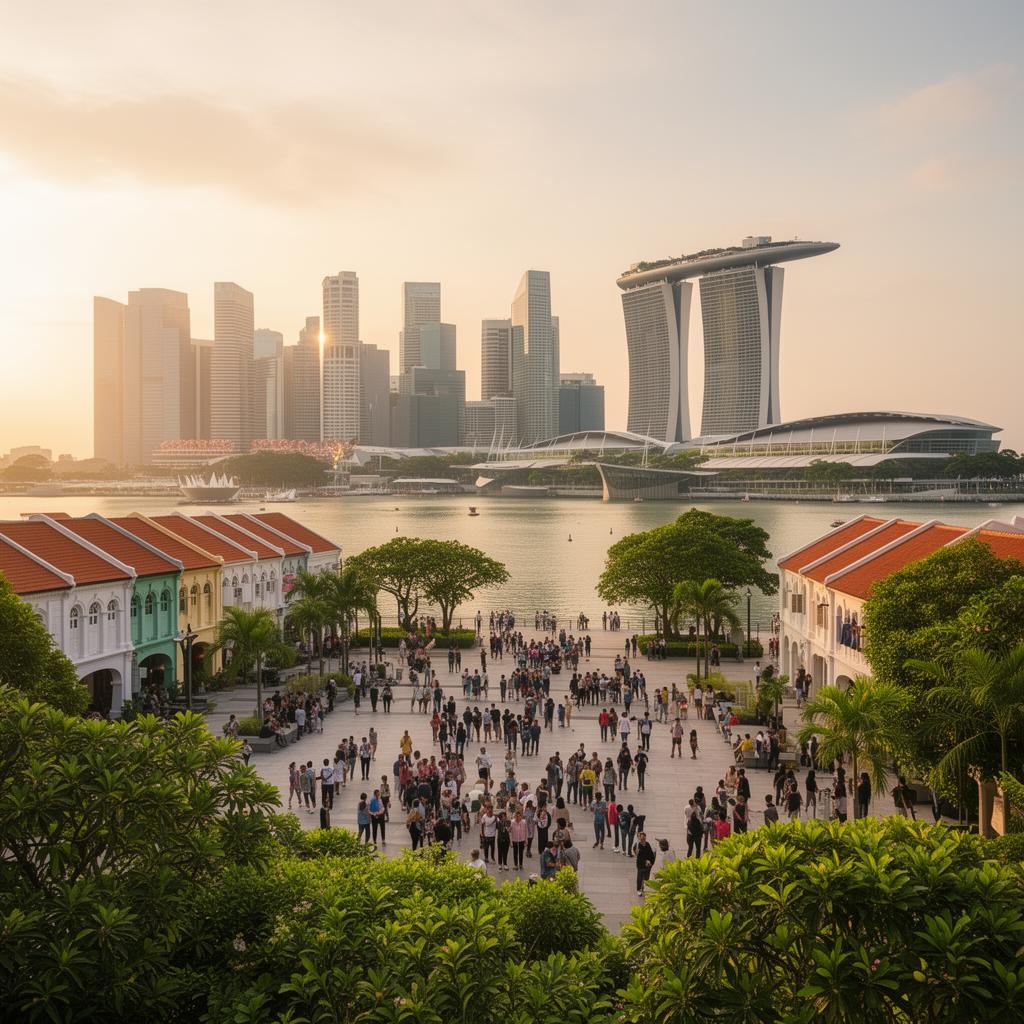
For Asian cities his framing has an extra edge. He has urged one to combine a village feel with a cosmopolitan arena — open to the world, stubbornly local — and to treat heritage as what it is: a non-renewable resource. Cities, he likes to say, quoting Patrick Geddes, are more than a place in space; they are a drama in time.
At the festival.
Landry is the Festival President of The Art of Citymaking. His masterclass came in three movements: the keynote, a short ceremonial launch of his latest book, and a dialogue with Mich Goh, Director of Public Policy for Asia-Pacific at Airbnb, moderated by Chris Law of The Oval Partnership — on how culture, policy and platforms meet in the everyday practice of citymaking across the region.
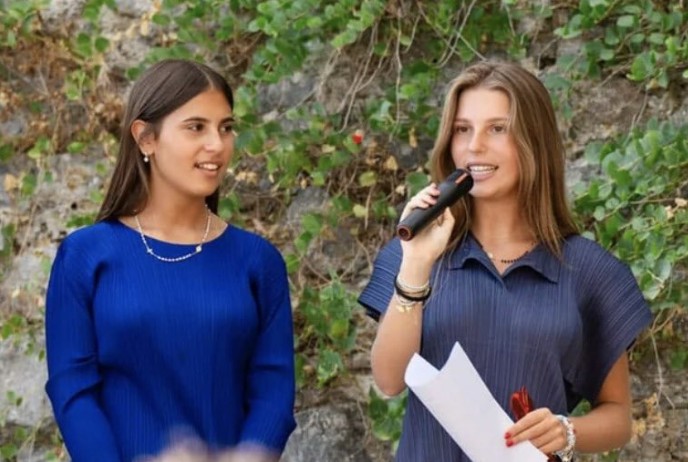
His shadow fell across the rest of the day as well. When Carla and Viola Bartoli took the stage to talk about Farm Cultural Park, the framing was that twenty years ago Landry gave the world a phrase, and in a half-forgotten Sicilian town a notary and a lawyer took it literally. That is the fairest measure of the work: not a doctrine, but a sentence other people could act on.
Further reading
- Charles Landry — books, essays and speaking
- Creative Bureaucracy Festival, Berlin
- Charles Landry in The Conversation — “Ten themes that will help build cities designed for people” (17 April 2014)
- Salone del Mobile Milano — “Creativity and urban regeneration”, interview by Giulia Marani
- The Hindu — “Kochi has potential to be a creative city” (6 March 2017)
- The UNESCO Courier — Culture, the DNA of cities
- Monocle Radio — “Purposeful Spaces: Charles Landry”
- Carla & Viola Bartoli: what a small town can teach a big one